2025
Imachii's Grid System
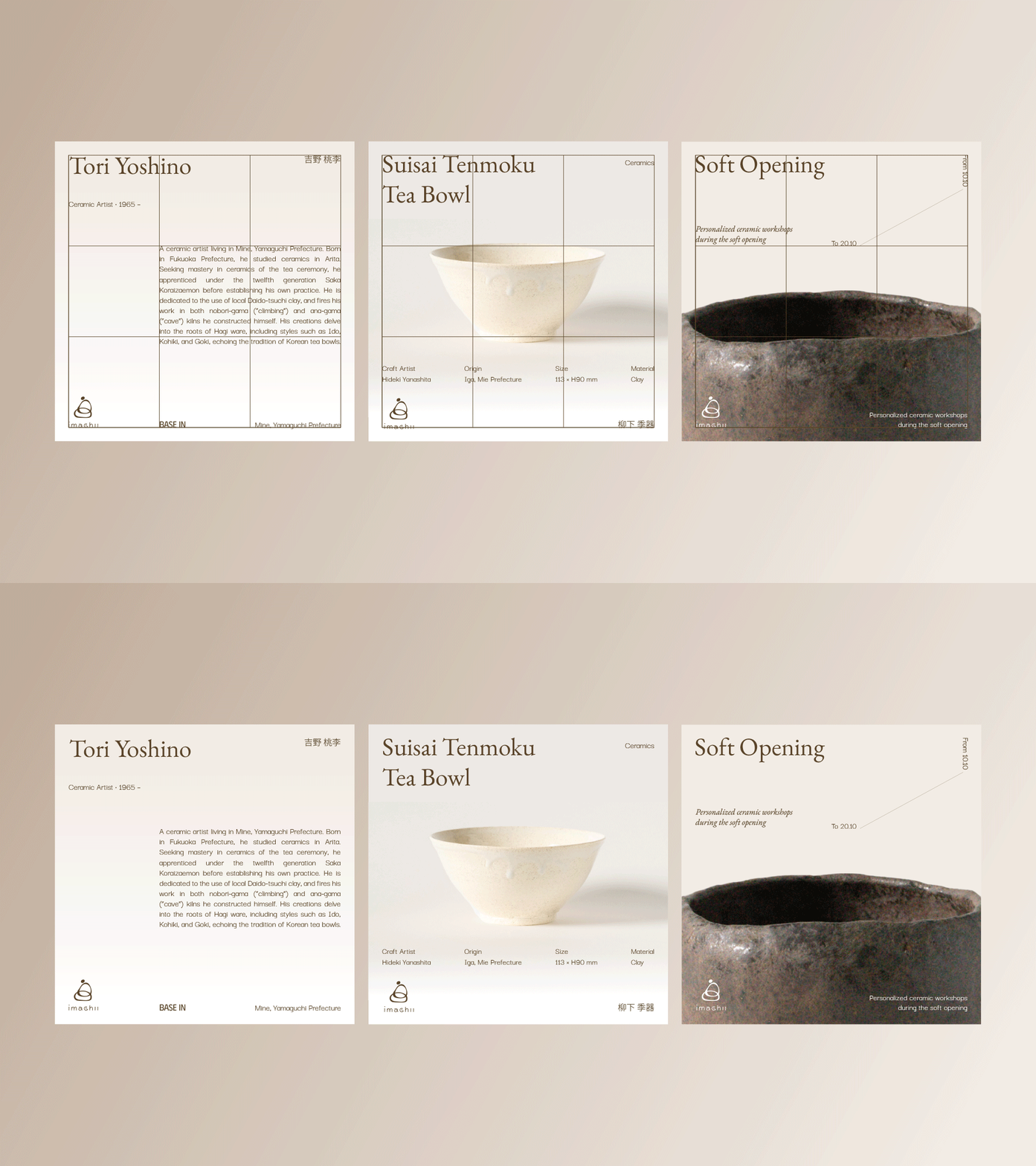

The name comes from Imachi-tsuki, a Japanese word meaning "sitting and waiting for the moon to rise." Ima means the present moment. Chii means small, quiet things.
This etymology shaped every structural decision in the identity. A brand about stillness and presence cannot express itself through visual noise. The grid system became the primary tool for achieving that: not decoration, but architecture.
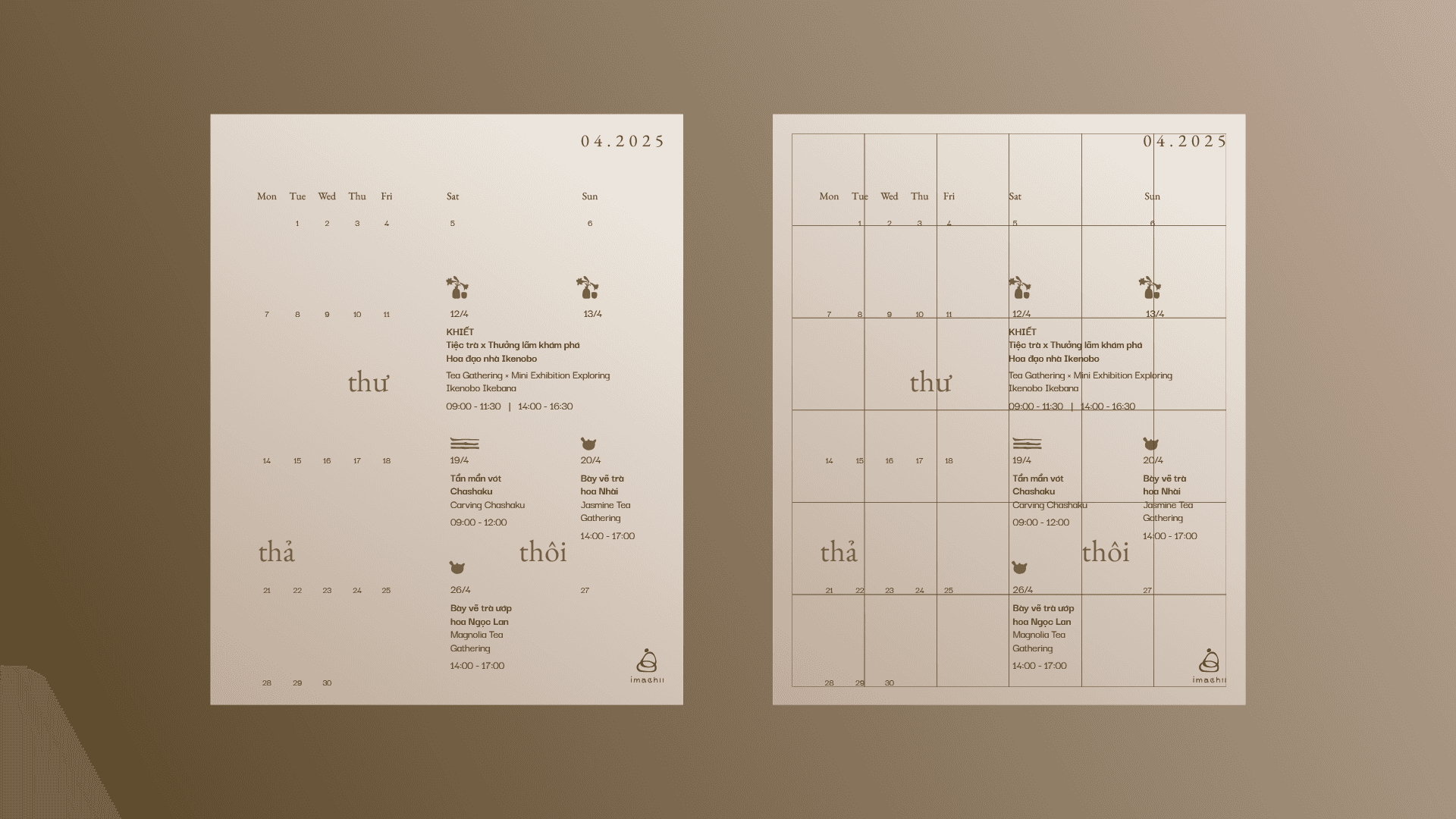
The central question of the project was how to create hierarchy, rhythm, and personality without relying on colour contrast, loud typography, or decorative elements. The answer was space itself.
Where most identity systems resolve visual tension by adding elements, the Imachii system resolves it by removing them. Margins are kept intentionally narrow at the frame edge, creating a sense of content pressing gently outward. Internal spacing between elements is generous and consistent, giving each piece of information room to be read on its own terms before the eye moves on. The result is a brand that feels unhurried — because the layout is literally built around pauses.
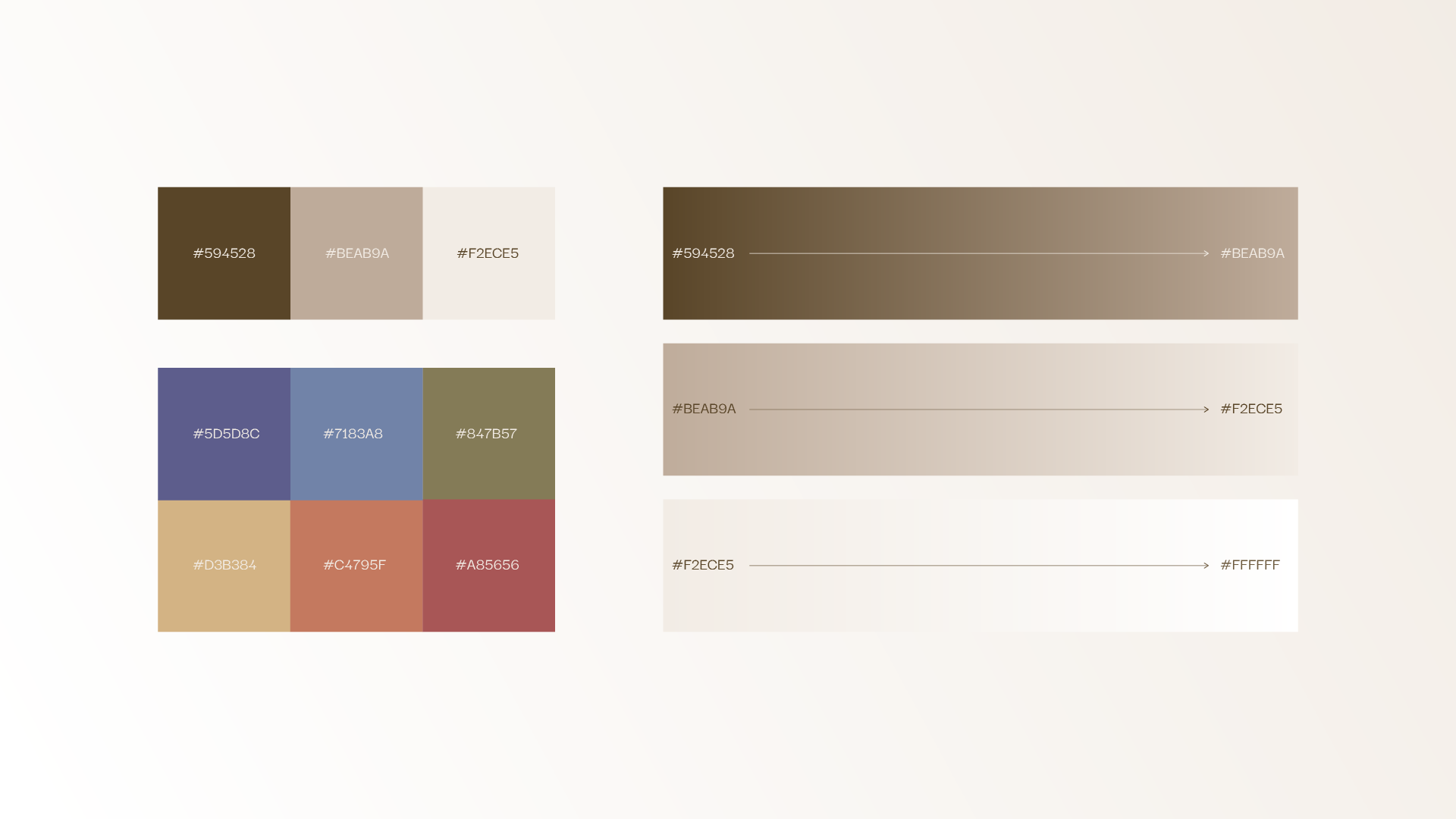
The colour palette is built from a single family of earth tones — deep brown, warm taupe, and pale cream — moving from dark to light like soil giving way to morning light. Almost all brand materials stay within this range. The gradient between these tones becomes a recognisable visual signature, used consistently across photography backgrounds and digital surfaces.
A secondary palette of more varied hues exists for special occasions: campaigns, collaborations, or product lines that call for something outside the primary range. These are held back from everyday use deliberately. In a space defined by stillness, colour that appears sparingly carries more weight when it does appear.
Photography follows the same colour logic. Images are graded toward medium light and warm shadow — never cool, never high contrast. The tonal range of the photographs sits within the same earth-tone family as the brand palette, so that when an image and a colour block appear together on the same surface, they feel like they belong to the same material world rather than two separate design decisions.
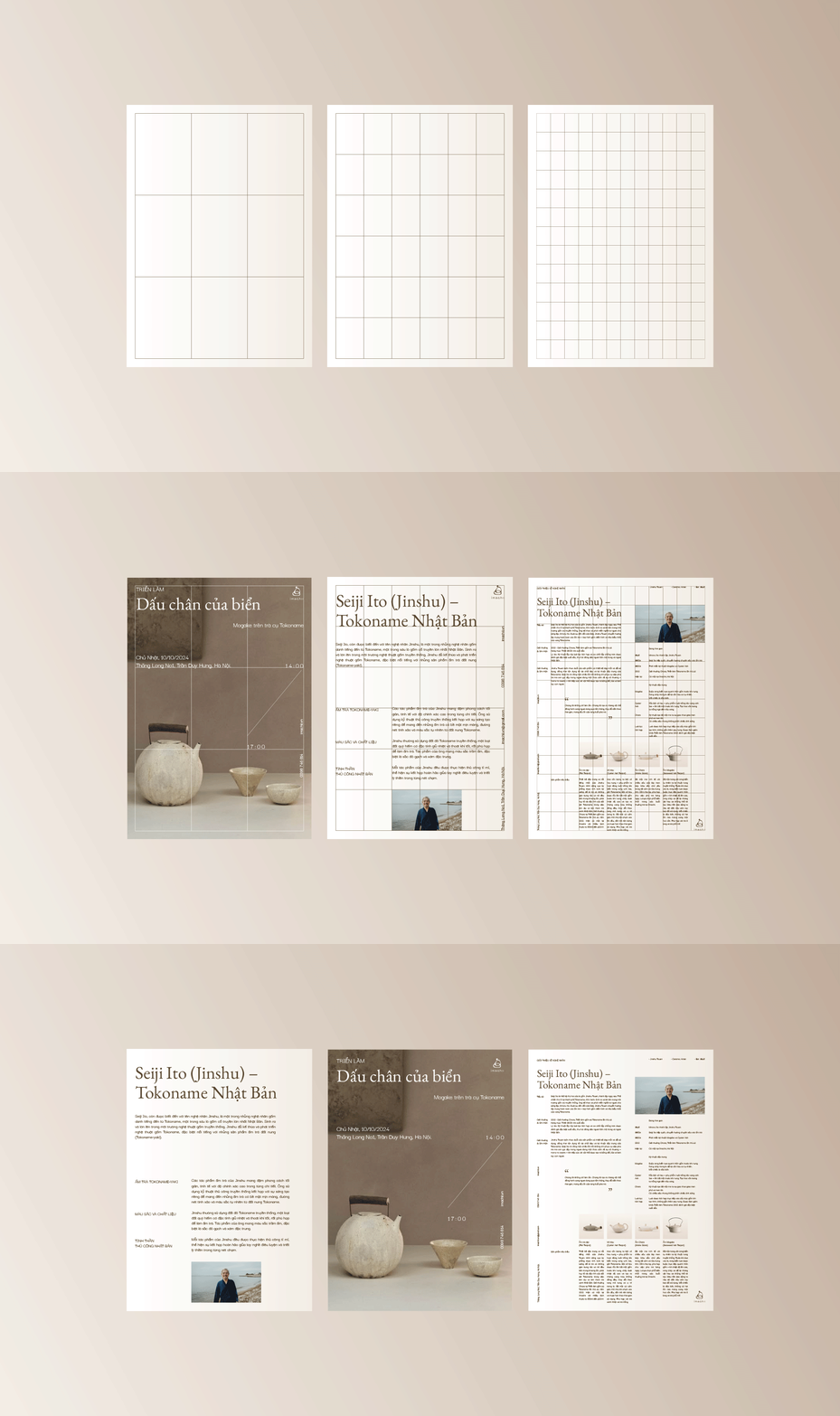
The grid operates across three column configurations — 3, 6, and 12 columns — selected based on the density of information each piece needs to carry.
What stays constant across all three is the underlying logic: elements of equal hierarchy share a common axis. Information groups are separated by space, not by borders or background fills. Nothing is centred for decorative effect — alignment is always a decision about relationship.
This consistency means that very different pieces of content — a workshop event poster, a product photograph with caption, a long-form artist profile — feel like they belong to the same family without looking identical.
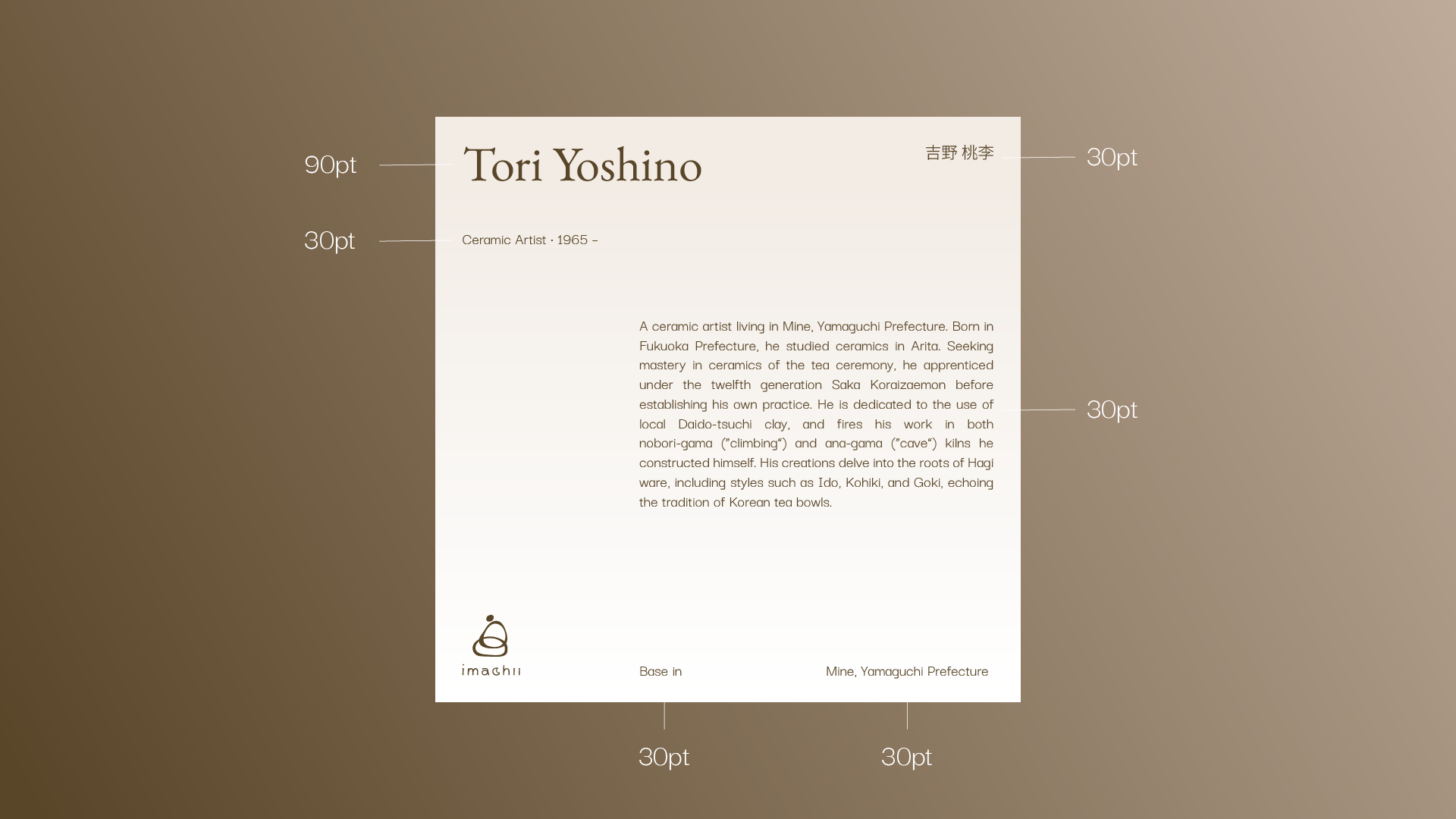
One of the more specific decisions in the system was how to handle typographic hierarchy. Imachii uses no more than two or three type sizes in any single piece. The ratio between headline and body is clearly defined across formats.
Rather than using dramatic size contrast or colour shifts to signal importance, the system uses grid position and spatial weight. A headline placed with generous space above it and tight space below it pulls the eye forward. A block of body text aligned to the same left margin as the headline it follows reads as continuation, not interruption. The hierarchy is felt before it is consciously noticed.
This approach is particularly deliberate for a brand whose products and content require careful reading. Imachii's social posts regularly carry dense information: artist biographies, craft technique explanations, ceramics provenance. The grid keeps all of that legible without making any piece feel like a data sheet.